When sizing an aeration mixer for your water body, matching its rated power to the actual water area and depth is the most critical step to avoid wasted energy and poor oxygen distribution. Many property owners and site managers make the mistake of over-sizing units to “be safe,” which drives up unnecessary electricity costs without delivering better water quality results. Others select underpowered models that fail to circulate lower water layers, leaving dead zones where organic waste builds up and algae blooms become frequent.
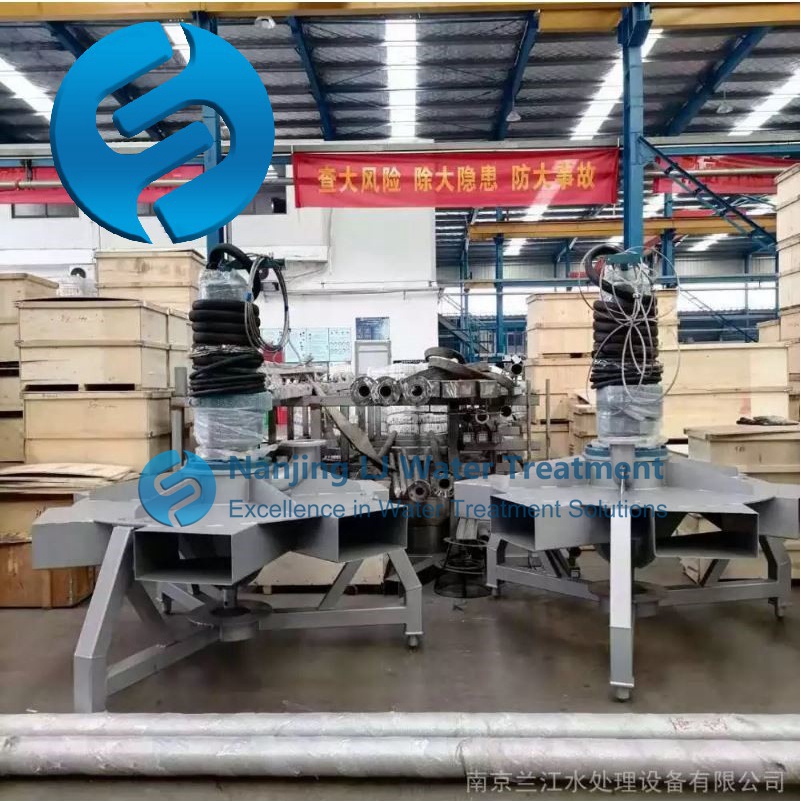
Core power-to-water area guidelines for different water body sizes
For small water bodies under 0.5 acres, a power output between 0.75 kW and 3 kW usually delivers sufficient mixing and oxygen transfer to keep dissolved oxygen levels stable across the entire surface. These smaller units work well for backyard ponds, small decorative water features, and compact pre-treatment tanks where water depth stays below 6 feet. For medium water bodies ranging from 0.5 acres to 5 acres, power outputs between 5 kW and 15 kW create consistent horizontal and vertical circulation that prevents thermal stratification even during warm summer months. This range fits most farm ponds, municipal stormwater basins, and mid-sized aquaculture raceway systems that handle regular organic loading from fish waste or surface runoff. For large water bodies over 5 acres, distributed power layouts with individual units sized between 20 kW and higher ensure no section of the water body is left untouched by mixing flow. This distributed approach works far better than installing one single oversized unit, which can only push effective circulation a limited distance from its mounting position.
Key depth adjustments that change required power output
Water depth is one of the most overlooked factors that shift how much rated power you actually need for full mixing. If your water body has an average depth greater than 6 feet, you will need to increase total system power by roughly 30 percent compared to the baseline surface area calculation. Deeper water creates more backpressure on the aeration mixer’s flow path, requiring extra power to push oxygen-rich surface water all the way down to the benthic layer. For water bodies with maximum depth over 12 feet, the baseline 1 to 1.5 CFM per surface acre rule still applies, but you will need to arrange multiple units at different placement points to pull water from the very bottom and circulate it upward without leaving unmixed pockets. Shallow water bodies under 18 inches of depth, by contrast, do not need high power ratings at all. Overpowering these shallow systems will only create unnecessary surface turbulence that wastes energy and can stir up settled sediment in unwanted ways.
How organic load and use case alter power matching rules
Different operational scenarios create very different oxygen demand levels that directly change how much rated power your aeration mixer requires. In active aquaculture setups with high fish stocking densities, you will need to boost total power output by 25 to 40 percent compared to a standard recreational pond of the exact same surface area. The extra organic waste from fish respiration and uneaten feed consumes dissolved oxygen much faster, so the system needs higher continuous mixing capacity to keep levels above 5 mg/L for healthy stock growth. For municipal wastewater treatment lagoons with high nutrient inflow, power should be sized to maintain consistent mixing 24 hours a day, with enough extra capacity to handle seasonal spikes in organic loading after heavy rain events. For recreational lakes and decorative ponds with low external nutrient inputs, you can stick closer to the baseline power calculation, as long as the system runs long enough each day to break down thermal stratification before it becomes established in mid-summer.
Even two aeration mixers with identical rated power can perform differently depending on impeller shape, installation height, and local water temperature. A well-matched unit will create steady, even circulation across the entire target zone without wasting electricity on unnecessary over-splashing at the surface. Taking the time to map your exact water dimensions, depth profile, and daily oxygen demand before finalizing power sizing will help you avoid common performance issues that show up months after installation.
Post time:2026-07-29
