Aeration Mixer Installation at High and Low Water Levels: What Actually Works
Water levels in a treatment basin never stay constant. They rise during storm events, drop during dry spells, and fluctuate daily with influent load changes. If your aeration mixer is installed for one specific water level and the level shifts, performance collapses. The mixer either runs dry, loses submergence, or creates dead zones. Getting the installation right for both high and low water conditions is not optional — it is the difference between a system that works year-round and one that fails every time the rain comes.
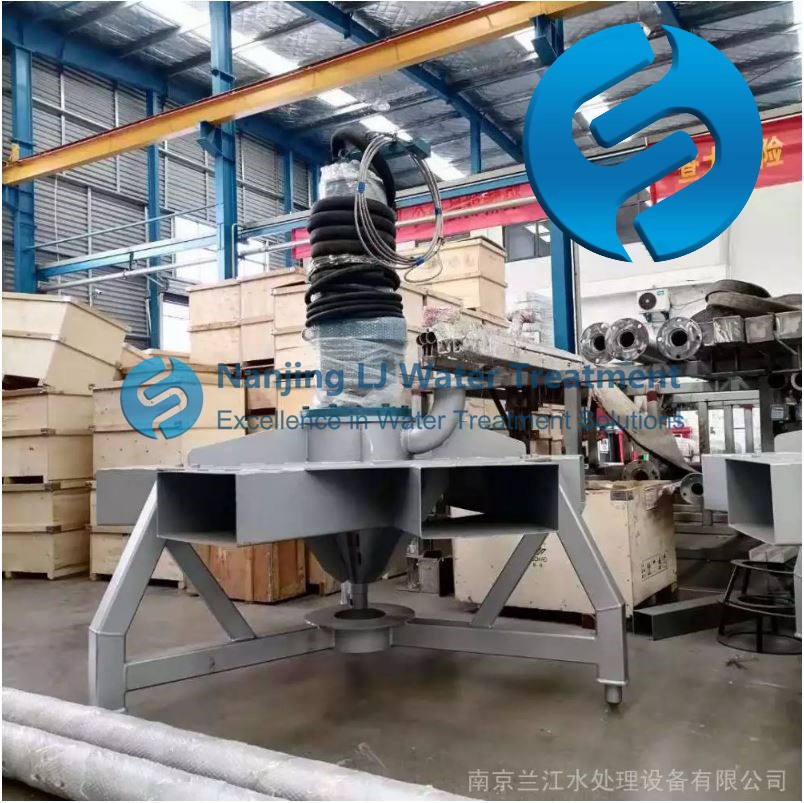
Why Water Level Changes Wreck Mixer Performance
Submergence Depth Determines Everything
The single most critical parameter for any aeration mixer is submergence depth — the vertical distance between the water surface and the mixer impeller or diffuser array. When the water level drops, submergence decreases. If the impeller breaks the surface, air gets sucked in instead of water, mixing efficiency plummets, and the motor can overheat from running unloaded. When the water level rises too high, the mixer sits deeper than designed, the discharge velocity drops, and the flow pattern no longer reaches the basin walls. Solids settle in the corners. Treatment efficiency tanks.
Most mixers are designed for a nominal operating water level with a tolerance band of plus or minus 0.3 to 0.5 meters. Outside that band, you are in uncharted territory where the manufacturer's performance curves no longer apply.
Flow Patterns Shift With Every Centimeter of Level Change
A mixer that creates a perfect radial flow pattern at design water level will produce a completely different pattern when the level shifts. At low water, the impeller is closer to the surface, so the upward flow jet hits the air and spreads laterally instead of pushing down toward the basin floor. At high water, the jet dissipates before it reaches the bottom, leaving a stagnant layer of sludge where no mixing occurs. The flow field is not just weaker — it is fundamentally reshaped.
Installation Principles for Variable Water Levels
Set the Mixer Elevation for the Lowest Expected Water Level
This is the golden rule. Always install the mixer at an elevation that guarantees full submergence even at the lowest water level the basin will ever see. That means measuring the historic minimum water level, not the average, not the design level — the absolute minimum recorded during the driest period in your data set. Then add a safety margin of at least 0.2 meters on top of that.
If the mixer sits too high, low water exposes the impeller. If it sits too low to compensate, high water buries it and kills the discharge velocity. The sweet spot is anchoring the installation to the low-water condition and accepting that high-water performance will be slightly reduced but still functional.
Use Adjustable Mounting Brackets or Guide Rails
Fixed-mount installations are a gamble in basins with wide water level swings. Adjustable mounting systems — typically guide rail assemblies with slotted brackets — let you raise or lower the mixer by 0.3 to 0.6 meters without pulling it out of the basin. This is standard practice in municipal wastewater plants where seasonal variation can exceed one meter.
The guide rail should be anchored to the basin wall or floor with corrosion-resistant hardware. The mixer hangs from the rail via a bracket that slides vertically and locks at the desired position. When water levels shift seasonally, operators adjust the bracket height, re-lock it, and the mixer is back in its optimal submergence zone. It takes twenty minutes and saves months of poor performance.
Tilt the Mixer Slightly Toward the Low-Water Side
Here is a trick that most installation guides overlook. When you expect significant water level variation, angle the mixer shaft slightly — about 3 to 5 degrees — toward the side of the basin that experiences the lowest water level. This ensures that even at minimum level, the impeller remains fully submerged on the deep side while the shallow side still gets adequate flow. At high water, the tilt becomes negligible because the entire impeller is covered anyway.
What Happens at Extreme Low Water
Dry Running Is the Silent Killer
When the water level drops below the impeller, the mixer starts pulling air. This is called dry running, and it destroys equipment fast. The motor draws less current without water resistance, which tricks some control systems into thinking everything is fine. But the mechanical seals overheat, the bearings run without lubrication from the surrounding liquid, and the impeller shafts can warp from uneven thermal expansion. Within hours, not days, you have a destroyed mixer.
Install a low-level float switch or ultrasonic sensor tied to the mixer's control circuit. When the water drops below the minimum safe level, the system shuts the mixer down automatically. Do not rely on operators to notice — by the time someone sees the problem, the damage is done.
Reduced Mixing Volume at Low Water
Even if the mixer stays submerged, low water means less total volume to mix. The same impeller in a shallower basin creates higher velocity jets that hit the walls harder and bounce back, creating chaotic turbulence instead of smooth circulation. This is not dangerous, but it is inefficient. Energy goes into wall impact instead of bulk flow. If your basin regularly operates at low water, consider a smaller impeller or a variable-speed drive that reduces RPM when the level drops, matching the mixer output to the available volume.
What Happens at Extreme High Water
Buried Mixers Lose Discharge Energy
At high water levels, the mixer sits deeper than intended. The discharge from the impeller has to travel farther to reach the surface and the basin walls. By the time the flow arrives, its velocity has dropped significantly. The result is a sluggish basin with poor solids suspension near the floor. Sludge accumulates, odor problems develop, and the clarifier downstream gets hammered with solids it was never designed to handle.
The fix is to accept that high-water performance will be compromised, or install a second mixer at a higher elevation that activates only when the water level rises above a set point. Dual-elevation installations are common in basins with more than one meter of seasonal variation.
