Submersible aeration mixers have become a foundational solution for modern water treatment and aquaculture operations, as more facilities shift toward compact, low-noise, and energy-efficient systems that operate entirely below the water surface. Unlike traditional surface-mounted equipment that relies on above-water agitation to transfer oxygen, these fully submerged units combine two critical functions — continuous mixing and targeted aeration — into a single streamlined process that supports a wide range of water body conditions. The design eliminates the need for large above-ground support structures, reduces exposed moving parts, and creates far less surface turbulence that can waste energy through unproductive water splashing.
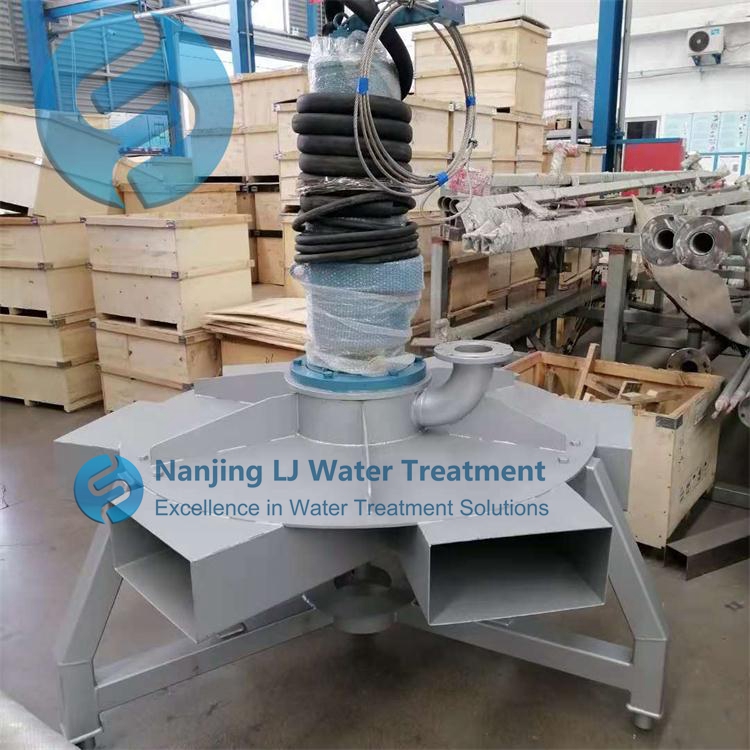
Core Working Principles of Submersible Aeration Mixer Systems
Every submersible aeration mixer operates through two closely coordinated processes that work in sync to improve overall water quality. The mixing process begins when the underwater motor drives a precision-engineered impeller, which pushes water in a consistent directional flow to create continuous circulation across the entire tank or pond. This flow prevents solid particles from settling on the bottom, keeps suspended matter evenly distributed, and eliminates stagnant zones where anaerobic conditions can quickly develop. The aeration process draws fresh air from above the water line through dedicated intake lines, feeds it directly into the high-speed mixing chamber, and breaks incoming air into extremely fine bubbles through mechanical shearing action. These micro-sized bubbles remain suspended in the water column far longer than bubbles from coarse aeration systems, giving more time for oxygen to dissolve evenly across different depths.
Performance Advantages in Biological Reactor and Wastewater Treatment Settings
For municipal and industrial biological reactor systems, submersible aeration mixers address many of the most persistent operational pain points associated with separate mixing and aeration equipment. In activated sludge processes, these units can maintain full suspension of microbial flocs without creating excessive shear force that would break apart the delicate biological communities responsible for breaking down organic waste. Operators can adjust the balance between mixing intensity and aeration output to match different stages of the treatment cycle, shifting from high-flow circulation in anaerobic zones to combined mixing and oxygen delivery in aerobic zones without installing multiple separate systems. The fully submerged operation also reduces overall energy consumption compared to conventional surface aeration, as less power is lost to air friction and surface disturbance, and noise levels stay low enough to meet strict workplace environmental standards. Many facilities report more uniform dissolved oxygen distribution across large tank volumes, which reduces dead spots where untreated organic material would otherwise accumulate and cause process instability.
Practical Deployment in Aquaculture Ponds and Recirculating Systems
In shrimp ponds, fish farming operations, and large-scale recirculating aquaculture systems, submersible aeration mixers solve the dual challenge of maintaining consistent dissolved oxygen levels while preventing waste buildup on the pond or tank floor. Traditional paddlewheel or surface aerators often leave lower water layers with very low oxygen content, creating conditions that stress cultured species and encourage the release of toxic compounds from bottom sediments. Submersible units push oxygen-rich water down toward the bottom, lifting settled uneaten feed, fish waste, and organic debris back into the main water column where natural decomposition processes can break them down efficiently. This continuous vertical circulation helps stabilize water quality parameters across the entire culture volume, reducing the risk of sudden oxygen depletion during high-temperature periods or early morning hours when aquatic organisms consume oxygen at elevated rates. For outdoor ponds spanning several acres, multiple units can be positioned to create large-scale directional flow that prevents thermal stratification and supports more uniform water temperature throughout the entire water body.
Long-Term Operational and Maintenance Considerations
Proper installation and consistent routine care extend the service life of any submersible aeration mixer and preserve its performance efficiency over years of continuous use. Most modern systems are built with robust sealing structures that withstand extended submersion at significant depths, but regular inspection of motor insulation and seal integrity prevents unexpected underwater failures that could disrupt treatment or aquaculture cycles. Operators should periodically check impeller surfaces for accumulated debris, tangled fibrous material, or uneven wear that can throw off rotational balance and cause unnecessary strain on the motor. Intake air lines should be kept clear of dust, debris, and moisture blockages to ensure unobstructed air flow that maintains consistent bubble generation and oxygen transfer rates. When lifting units out of the water for inspection, guided lifting rail systems allow maintenance teams to complete service work without fully draining the tank or pond, minimizing operational downtime and avoiding costly disruptions to ongoing biological processes.
Post time:2026-11-09
