A structured disassembly, inspection and maintenance workflow for aeration mixers ensures that every critical component is thoroughly assessed, serviced, and restored to its designed performance level, avoiding hidden wear issues that could lead to unexpected operational failures. This process follows a logical sequence that prioritizes on-site safety first, then moves step by step through component access, detailed condition checks, targeted servicing, and proper reassembly, to keep the equipment running reliably for extended periods in water treatment and industrial mixing environments.
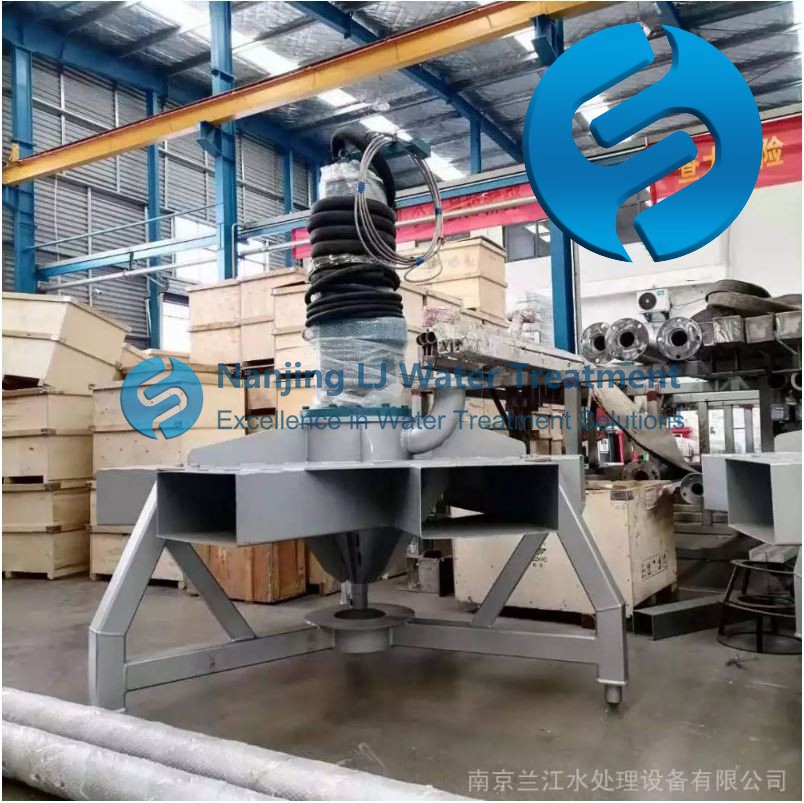
Pre-Work Preparation and Site Safety Lockout
Before any disassembly action begins, the entire aeration mixer system must be fully isolated from all connected power and fluid supply sources. Technicians confirm that all power circuits are locked out and tagged to prevent accidental energization, and all connected pipeline valves are fully closed and secured to stop residual medium from flowing back into the work area. All necessary hand tools, lifting aids, and cleaning supplies are arranged within easy reach near the work site, and a clear work zone is marked to keep unrelated personnel away from moving or suspended components during the whole process. The team also records the original installation position, mounting angle, and cable routing of the mixer before any part is removed, to avoid misalignment issues during later reassembly.
Stepwise Disassembly and Component Condition Inspection
The disassembly process follows a sequence that moves from external connected parts to the internal core structure. Technicians first remove all external connecting pipes, signal cables, and mounting accessories, marking every connection point clearly for accurate reinstallation later. Then the main unit of the aeration mixer is carefully separated from its mounting base, and the outer protective housing is removed to expose the internal drive and mixing components. Every disassembled part goes through a detailed visual and dimensional inspection, where technicians check for shaft runout, seal surface wear, impeller edge abrasion, and any sign of material fatigue or corrosion on load-bearing structures. All inspection findings are documented on-site to track the wear trend of each component across multiple maintenance cycles.
Component Servicing, Reassembly and Post-Maintenance Validation
After all inspection tasks are completed, technicians carry out targeted servicing for every part that shows signs of wear or contamination. All accumulated sludge, scaling, and debris on mixing surfaces and flow paths are fully cleared with non-abrasive cleaning methods, and lubrication points for rotating parts are refilled with lubricant that matches the equipment’s original design specifications. Worn sealing elements and heavily abraded moving parts are replaced according to the inspection results, before all components are reassembled in the reverse order of disassembly, following the original alignment marks recorded earlier. Once reassembly is finished, the equipment goes through a no-load test run first to check for abnormal noise or vibration, then moves into partial load and full load operation validation, to confirm that mixing efficiency, aeration output, and running current all fall within the standard design parameters before the system is handed back to regular operation.
Post time:2026-09-02
