Complete Structural Design of Pond Aeration Mixers
Pond aeration mixers are widely used in aquaculture ponds, landscape water systems, ecological restoration projects, and wastewater treatment lagoons. Their primary function is to improve dissolved oxygen levels while maintaining stable water circulation. The overall structural design of these systems directly affects aeration efficiency, operational stability, and long-term durability in outdoor environments.
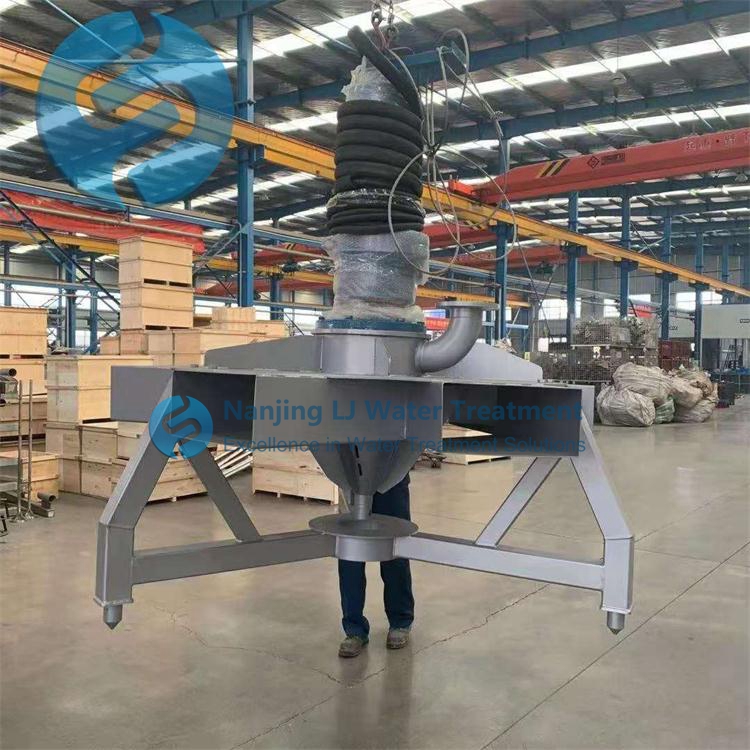
Main Body Structure
The central body of a pond aeration mixer combines several functional components into a coordinated operating system.
Integrated Equipment Layout
Most pond aeration mixers use an integrated structural arrangement that combines the motor, impeller, aeration assembly, and support frame into a compact unit. This design improves installation efficiency and helps reduce structural vibration during operation.
Protective Outer Housing
The outer casing is designed to protect internal components from moisture, sediment, and environmental exposure. Smooth external surfaces also help reduce debris accumulation during long-term use in ponds.
Balanced Weight Distribution
The overall structure is arranged to maintain operational balance. Proper weight distribution improves floating stability and minimizes unnecessary movement caused by water turbulence.
Motor and Power Transmission Structure
The motor system is one of the most important structural sections of the equipment.
Waterproof Motor Housing
The motor is usually enclosed within a sealed waterproof structure designed for continuous operation in humid outdoor conditions. Reliable sealing helps prevent water intrusion and internal corrosion.
Stable Shaft Connection
The transmission shaft connects the motor to the impeller assembly. Precision alignment helps maintain stable rotation while reducing mechanical wear during continuous operation.
Bearing Support Assembly
Heavy-duty bearings support rotational movement and help minimize vibration. Durable bearing structures are essential for maintaining smooth long-term operation.
Aeration and Mixing Components
The aeration system and mixing mechanism work together to improve water quality and circulation.
Impeller Structure
The impeller is designed to generate strong water movement throughout the pond. Optimized blade geometry improves liquid circulation and helps prevent stagnant zones.
Air Intake System
Many pond aeration mixers include built-in air intake channels that guide oxygen into the water flow generated by the impeller. This structure improves oxygen transfer efficiency.
Bubble Diffusion Arrangement
The aeration outlet is often engineered to produce smaller oxygen bubbles. Fine bubbles remain suspended longer in water and increase oxygen contact efficiency.
Floating and Support Structure
Pond environments often require floating or semi-floating installation systems.
Floating Platform Assembly
The equipment may be mounted on a floating platform that supports stable surface operation. Floating structures automatically adapt to changing pond water levels.
Support Frame Reinforcement
The support frame provides structural stability for the entire assembly. Reinforced framework designs help resist vibration, wind forces, and continuous water movement.
Anchoring Connection Design
Anchoring systems help maintain equipment position within the pond. Secure fixing structures reduce drifting caused by currents or surface movement.
Electrical and Cable Structure
Outdoor pond operation requires reliable electrical protection.
Waterproof Cable Protection
Power cables are commonly enclosed within protective sleeves or waterproof conduits to prevent moisture damage and mechanical wear.
Sealed Electrical Connections
Connection points are designed with waterproof sealing structures to improve electrical safety and operational reliability.
External Cable Support
Cable support brackets and routing systems help keep electrical lines organized and protected from environmental exposure.
Corrosion-Resistant Structural Features
Pond environments can expose equipment to algae, organic matter, and changing weather conditions.
Corrosion-Resistant Materials
The structural body often uses stainless steel or specially treated alloys to improve resistance against rust and chemical corrosion.
Surface Protective Coatings
Protective coatings help extend equipment lifespan by reducing oxidation and environmental deterioration.
UV-Resistant Exterior Design
Outdoor exposure requires structural materials that can tolerate prolonged sunlight and temperature variation without significant degradation.
Maintenance-Oriented Structural Design
Efficient maintenance access is an important part of the overall equipment structure.
Modular Component Arrangement
Some pond aeration mixers use modular structural sections that simplify disassembly and replacement during servicing.
Accessible Inspection Points
Critical components such as seals, bearings, and fastening systems are often positioned for easier inspection and maintenance access.
Lifting and Handling Structure
Integrated lifting hooks or transport brackets help simplify equipment movement during installation and maintenance procedures.
Post time:2026-05-20
