Industrial wastewater tanks present unique operational challenges that standard surface aeration equipment often cannot fully address, from highly variable hydraulic loads and fluctuating organic concentrations to the presence of grease, fibrous solids, and corrosive compounds that can accelerate wear on submerged components. Aeration mixers built specifically for these environments combine targeted oxygen delivery with powerful, full-tank circulation to keep solids suspended, prevent odorous anaerobic conditions, and support consistent biological breakdown even under the most demanding industrial operating conditions. Their dual-function design eliminates the need to coordinate separate aeration and mixing systems, making them a practical solution for facilities that need to upgrade existing tanks without major structural reconstruction.
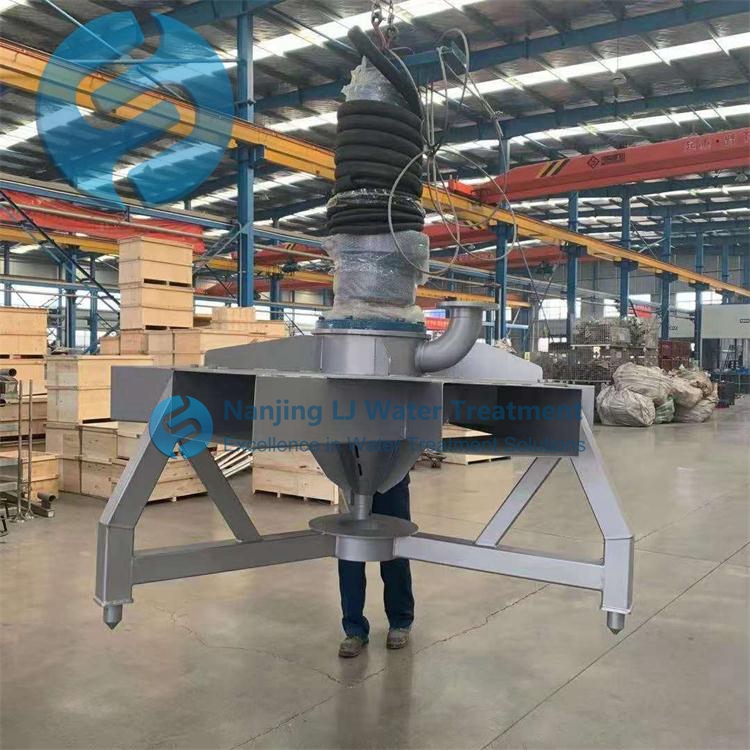
Core Functions of Aeration Mixers in Industrial Wastewater Tanks
Even, continuous mixing is the first critical function that aeration mixers deliver in industrial wastewater applications, ensuring that no portion of the tank becomes a dead zone where heavy solids settle and accumulate over time. In equalization tanks, this consistent circulation smooths out dramatic swings in pH, temperature, and contaminant concentration that often arrive from batch production lines, creating a stable, uniform wastewater flow that downstream treatment processes can handle reliably. This prevents shock loads that would otherwise disrupt biological systems, damage sensitive treatment components, or push effluent quality outside regulated discharge limits.
When paired with controlled aeration, these mixers introduce dissolved oxygen at a rate that matches the specific degradation needs of the industrial waste stream, whether treating high-strength food and beverage wastewater, chemical manufacturing discharge, or oily runoff from industrial processing areas. The combined action of mixing and fine bubble dispersion extends the contact time between air bubbles and the surrounding liquid, drastically improving oxygen transfer efficiency compared to systems that only release air from fixed diffusers. This allows aerobic bacteria to break down complex organic compounds, reduce BOD and COD levels rapidly, and suppress the release of hydrogen sulfide and other foul-smelling gases that often build up in stagnant industrial wastewater storage.
Adaptability Across Different Industrial Tank Configurations
Industrial wastewater facilities rarely operate with a single, standardized tank layout, which is why aeration mixers for these environments are engineered to perform reliably across a wide range of tank sizes, depths, and operating conditions. Large, open lagoons used for emergency wastewater storage or pre-treatment benefit from the wide hydraulic coverage these units provide, eliminating the need for a dense network of diffusers that would require costly draining and cleaning to maintain. Deep, narrow process tanks, which once posed major challenges for traditional aeration equipment, can be fully circulated without the risk of overheating, thanks to designs that use the surrounding process water for natural cooling.
Many industrial sites also operate under strict rules that limit the amount of time a wastewater tank can be taken offline for upgrades or repairs. Aeration mixers designed for retrofitting can be installed directly into existing basins without full dewatering, cutting down installation time from days or weeks to just a few hours of planned downtime. This is especially valuable for continuous-process industrial facilities where even a short interruption in wastewater handling capacity can create major production bottlenecks and compliance risks.
Operational Advantages for Long-Term Industrial Site Performance
Corrosion resistance and minimal submerged moving parts are non-negotiable design priorities for aeration mixers that operate in industrial wastewater, where pH extremes, chemical residues, and abrasive suspended solids can quickly degrade standard equipment. Heavy-duty sealing systems prevent process liquid from entering motor and gear components, extending service life and reducing the frequency of unplanned maintenance calls. Units built with non-clogging impeller geometry can pass small, hard debris and fibrous industrial waste without jamming, avoiding the sudden shutdowns that often lead to partially treated wastewater being held in tanks for extended periods.
The ability to switch between full aeration, mixing-only, and intermittent operating modes gives industrial plant teams far more control over their treatment process as production schedules shift. During periods of low wastewater generation, operators can reduce aeration intensity to cut unnecessary energy use, while still maintaining enough mixing to keep solids suspended and prevent septicity. When a high-volume batch discharge arrives from the production floor, the system can ramp up oxygen delivery and circulation speed immediately to handle the increased organic load, ensuring consistent performance even when operating conditions change with very little advance warning. This level of responsive control helps industrial sites meet strict discharge regulations, reduce long-term operational costs, and avoid the unplanned process failures that can disrupt core production activities.
Post time:2026-10-27
