Core Roles of Aeration Mixers in Slurry Treatment Workflows
Slurry with high solids content, thick viscous texture, and uneven particle distribution creates unique challenges that standard surface aeration systems cannot fully address. Aeration mixers are engineered to generate powerful, targeted flow patterns that penetrate deep into dense slurry layers, lifting settled solids from the bottom of tanks and preventing heavy sediment from building up into hard, unmovable deposits. This continuous agitation keeps every solid particle suspended evenly across the entire tank volume, so no section of the slurry remains stagnant or untouched by the aeration process. The combined action of mixing and aeration also breaks up large clumps of organic or mineral solids, exposing more surface area to oxygen, microbial activity, or chemical additives that are introduced during treatment. Without this synchronized performance, slurry treatment processes develop large dead zones, uneven biological activity, and inconsistent end product quality that forces operators to run extended, inefficient processing cycles.
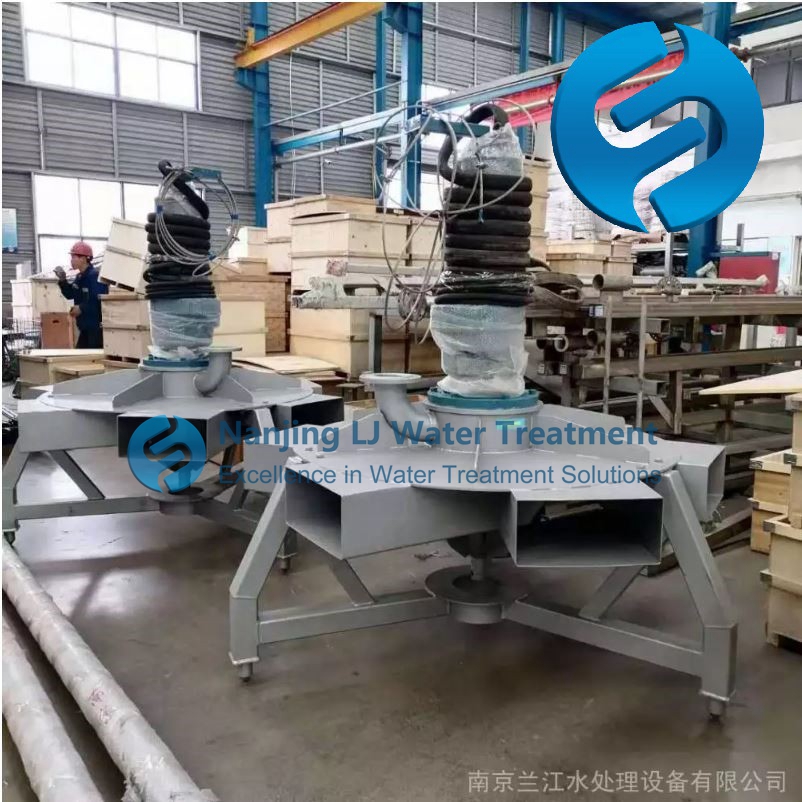
How Aeration Mixers Handle High-Solids Slurry Properties
Dense slurry with high wet solids content creates far more resistance to fluid movement than clear water, so mixer flow patterns must be carefully calibrated to avoid wasting energy on surface turbulence that never reaches deeper layers. The directional thrust generated by the mixer pushes aerated bubbles deep into the slurry mass, preventing small bubbles from escaping immediately at the surface and extending their contact time with suspended particles. This extended contact dramatically improves oxygen transfer efficiency, even when slurry viscosity is high enough to trap fine air pockets and slow normal gas diffusion. The consistent, steady motion also prevents fibrous or stringy materials common in many slurry streams from settling into tangled, heavy mats that would otherwise block flow and create anaerobic pockets underneath the surface. Over time, this uniform mixing prevents stratification, where layers of different solids concentrations form distinct bands across the tank, making downstream processing far less predictable.
Operational Adjustments for Different Slurry Composition Scenarios
For slurry with high organic content from biological treatment systems, operators can adjust mixer runtime and aeration intensity to match the exact oxygen demand of the microbial colonies breaking down waste material. This fine-tuned control supports both aerobic digestion phases that reduce volatile solids content and anoxic phases that support targeted nutrient removal, all using the same set of equipment. When slurry contains high concentrations of abrasive mineral particles, operators can adjust mixer depth and flow direction to minimize unnecessary wear on submerged components, while still maintaining full suspension of all solids across the tank. For slurry that sits unused for long periods between processing cycles, running the mixer at low speed for a short pre-treatment cycle before restarting full aeration breaks up soft surface sediment layers gradually, preventing sudden overloads that could strain the system once full operation begins. These small, targeted adjustments make it possible to maintain stable performance even as incoming slurry composition shifts seasonally or changes with upstream process variations.
Long-Term Process Benefits of Consistent Slurry Aeration and Mixing
Well-calibrated aeration mixer systems reduce the total volume of residual solid waste that requires final disposal, because more complete biological breakdown of organic material takes place when every particle receives uniform oxygen exposure. This also cuts the energy required for downstream dewatering processes, since evenly mixed slurry forms a more consistent filter cake with better drainage properties, rather than uneven clumps that trap excess water. Over months of continuous operation, the absence of heavy settled sludge deposits on tank floors eliminates the need for frequent, labor-intensive manual tank cleaning that requires full system shutdown. The steady, uniform environment also supports more predictable microbial population dynamics, so process performance stays consistent even during periods of variable incoming load, reducing the risk of unexpected process upsets that would disrupt the entire treatment workflow.
Post time:2026-10-30
